When Corning Gorilla Glass Becomes Essential | Gelivable
Why Some Applications Require Corning Gorilla Glass | GelivableWhy Some Applications Require Corning Gorilla GlassIn man···
Read MoreChemical strengthening for thin cover glass and precision glass components using ion exchange to create a compressive surface layer, with process parameters reviewed for soda-lime and high-alumina glass projects.
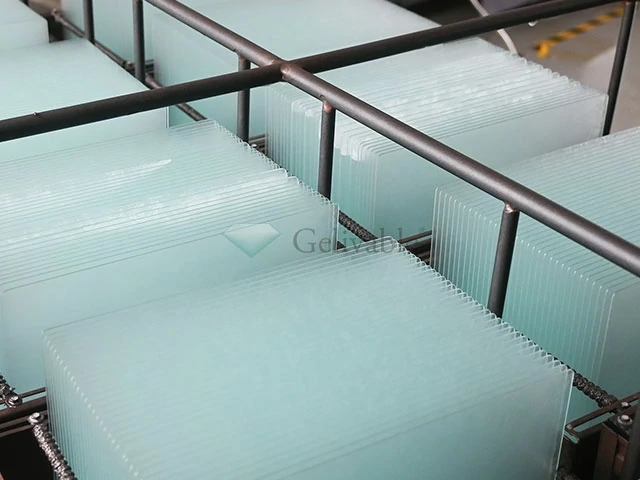
Chemical strengthening increases glass strength through ion exchange. The glass is treated in a controlled molten-salt process so larger potassium ions replace smaller sodium ions near the surface, creating a compressive stress layer.
This process is especially useful for thin cover glass and precision glass parts where thermal tempering may not be the preferred route. Material composition, thickness, finished geometry and required stress values should be reviewed together before production.
GelivableGlass current production-process reference covers both soda-lime glass and high-alumina silicate glass, with stress values checked after strengthening.
Get a quoteChemical strengthening is selected when a project needs increased mechanical strength while maintaining the dimensional accuracy and optical flatness required by thin or precision glass parts.
Ion exchange creates compressive stress near the glass surface, helping the finished part resist mechanical damage and bending loads.
Chemical strengthening is widely used for thin cover glass and small precision parts that may not be suitable for conventional thermal tempering.
Because the process does not use the rapid air-quench cycle of thermal tempering, it can preserve dimensional accuracy and flatness well for suitable parts.
GelivableGlass applies chemical strengthening to soda-lime and high-alumina silicate glass according to the required project performance.
Surface compressive stress and depth of layer can be measured to confirm the strengthening condition against the approved specification.
Cutting, CNC machining, drilling, printing and surface treatments can be planned around the strengthening sequence according to process compatibility.
The values below come from GelivableGlass current production-process information and are presented as process references. Final acceptance values should be confirmed for the selected glass, geometry and customer specification.
| Item | Reference / Project Consideration |
|---|---|
| Strengthening Principle | Potassium / sodium ion exchange in a controlled molten-salt process |
| Soda-Lime Glass Surface Compression | CS > 450 MPa |
| Soda-Lime Glass Depth of Layer | DOL > 8 μm |
| High-Alumina Glass Surface Compression | CS > 650 MPa |
| High-Alumina Glass Depth of Layer | DOL > 40 μm |
| Current Process Cycle Reference | 2-hour preheating + 4-hour chemical strengthening + 4-hour cooling |
| Final Verification | Stress values, dimensions and appearance should be checked against the approved project specification |
Strengthening performance depends on glass composition, thickness, edge condition, part geometry and process parameters. Final targets should be defined before production.
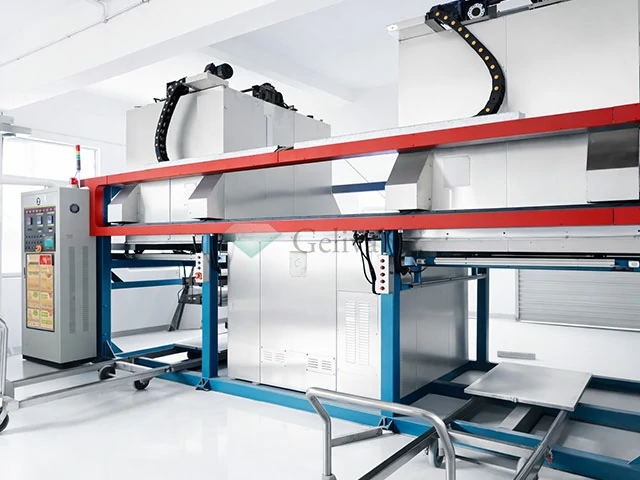
The glass is processed through a controlled thermal cycle and ion-exchange stage. Process time and temperature are selected for the glass composition and target stress condition.
Chemical strengthening should be verified by measurement rather than visual inspection alone. Surface compression and depth of layer can be checked with suitable stress-measurement equipment.
Chemical strengthening is widely used where thin glass, dimensional accuracy and increased mechanical strength are required in cover-glass and precision-component applications.
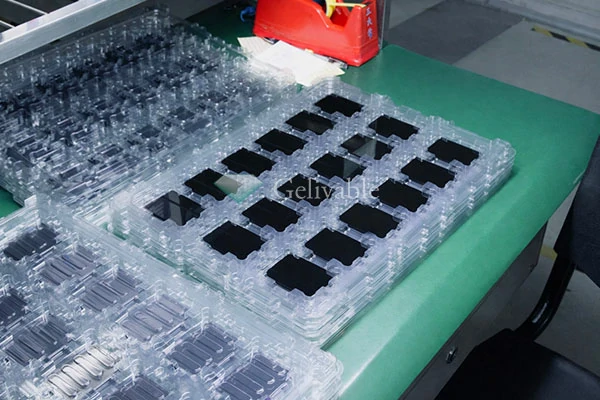
Thin display cover glass and touch-panel glass can use chemical strengthening to increase mechanical strength while preserving precise dimensions and optical quality.
Wearable-device cover glass can benefit from chemical strengthening where compact size, thin construction and resistance to handling or impact are important.
Medical monitors, diagnostic interfaces and handheld medical equipment can use strengthened cover glass where thin construction and reliable mechanical performance are required.
Industrial controllers, portable instruments and field equipment can use chemically strengthened glass for displays, control surfaces and protective windows.
Send us the glass material, dimensions, thickness, quantity, target CS/DOL values if specified, drawing, machining details and any printing, coating or bonding requirements.
GelivableGlass reviews the glass material, geometry and strengthening target as one process rather than treating ion exchange as an isolated step.
Soda-lime and high-alumina glass require different strengthening targets and process settings, so the material is confirmed before production.
Surface compression and depth of layer can be measured after strengthening to verify the finished stress condition.
CNC machining, drilling, edge finishing and compatible printing or coating steps are coordinated around the strengthening sequence.
Chemical strengthening uses ion exchange to create compressive stress near the glass surface. In a typical potassium-salt process, larger potassium ions replace smaller sodium ions in the surface region of the glass.
GelivableGlass current production-process information covers soda-lime glass and high-alumina silicate glass. Final suitability depends on the actual glass composition and project requirements.
CS is surface compressive stress. DOL is the depth of the strengthened compressive layer. Both are important process-control values for chemically strengthened glass.
The current production-process reference lists CS above 450 MPa and DOL above 8 μm for soda-lime glass, and CS above 650 MPa with DOL above 40 μm for high-alumina silicate glass.
The preferred process is to complete the required geometry before strengthening. Cutting or grinding after ion exchange can remove or interrupt the compressive surface layer at the processed area, so any post-strengthening machining must be specifically reviewed.
Chemical strengthening uses ion exchange and is well suited to thin, precision glass. Thermal tempering uses heating and rapid air cooling and provides the characteristic small-fragment breakage behavior of fully tempered glass. The correct method depends on glass thickness, material and product requirements.
Please provide the glass material, thickness, dimensions, quantity, drawing, target CS/DOL if specified, and any CNC machining, printing, coating, bonding or impact-test requirements.
Read technical articles about chemically strengthened glass, ion exchange, cover glass, surface stress, CNC pre-processing and custom glass fabrication.
View All BlogSend us your glass material, dimensions, thickness, drawing and strengthening target. GelivableGlass can review the ion-exchange process together with CNC machining, printing, coatings and final assembly requirements.
Contact our team for material review, sample validation, stress-target discussion and quotation support.