When Corning Gorilla Glass Becomes Essential | Gelivable
Why Some Applications Require Corning Gorilla Glass | GelivableWhy Some Applications Require Corning Gorilla GlassIn man···
Read MoreCustom mirror coating for display cover glass, smart mirrors and precision glass components, with reflection, transmission, coating area and downstream glass fabrication reviewed as one complete process.
Glass mirror coating applies a reflective layer to the glass surface to create a mirror-like appearance. Depending on the coating design, the finished glass can be primarily reflective or can retain controlled light transmission for display content behind the glass.
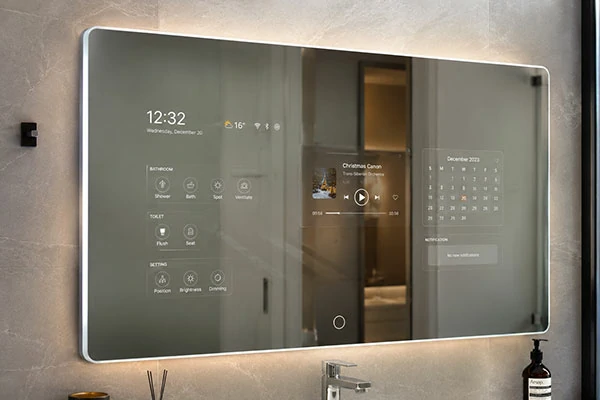
For smart mirror and hidden-display applications, reflection and transmission must be considered together. A stronger mirror effect can reduce the amount of display light passing through, so the coating target should be matched to display brightness, viewing environment and the intended inactive appearance.
GelivableGlass can coordinate mirror coating with CNC machining, holes and cutouts, printing, glass strengthening, compatible anti-fingerprint treatment and adhesive bonding according to the approved drawing and coating structure.
Looking for the finished product page? See Mirror-Coated Glass.
Get a quoteMirror coating is useful when a product needs a reflective front surface, a hidden display effect or a controlled optical appearance integrated into a custom glass component.
The reflective effect can be reviewed around the product design, ambient lighting and required visual appearance instead of relying on a generic mirror finish.
Semi-transparent mirror designs can allow illuminated content to remain visible while the inactive front surface retains a reflective appearance.
The coating target can be defined around both reflected light and transmitted display light because the two requirements directly influence the final viewing result.
Borders, logos, icons, masking areas and display windows can be planned together with the coating so the finished interface has a consistent visual structure.
Anti-fingerprint treatment can be evaluated for touch mirror interfaces when the AF layer, mirror coating and printing stack are compatible.
Machining, strengthening, coating, printing and bonding can be sequenced around the final product rather than treating mirror coating as an isolated step.
Mirror-coated glass is project-specific. The most important specifications are the optical target, coating location, visible areas and compatibility with the complete glass and display assembly.
| Parameter | Processing Consideration |
|---|---|
| Mirror Appearance | Define whether the glass should behave mainly as a reflective mirror, a semi-transparent display mirror or a decorative reflective surface. |
| Reflection / Transmission | For display applications, target reflection and light transmission should be evaluated together with the actual display brightness. |
| Coating Side | The coating side should be selected according to optical performance, surface protection, touch requirements and the final assembly structure. |
| Coating Area | Full-area coating, display windows, masked regions and printed areas should be clearly identified on the drawing. |
| Residual Color | Reflective coatings can show a visible color tone depending on the coating design. Appearance requirements should be approved using samples when color is important. |
| Surface Protection | The coated face may require controlled handling or a compatible temporary protection method during fabrication and shipment. |
| Final Validation | For smart mirror displays, validate the coating with the actual display module because perceived brightness and mirror effect depend on the complete optical stack. |
GelivableGlass current mirror-coated glass information emphasizes application-based optical balance rather than one universal reflectivity value. Final coating performance should be confirmed for the specific product.
Mirror coating is selected according to the intended optical function. Conventional reflective use and semi-transparent smart-mirror use may require different coating structures and different transmission targets.
Mechanical processing and strengthening requirements should be coordinated before the final coating sequence is fixed, because holes, cutouts and custom profiles are normally completed before the finished coated surface is protected.
Mirror coating should be inspected for both optical performance and visible appearance. For display-through-mirror projects, the inactive mirror effect and active display visibility should both be checked.
Uniformity, coating defects, scratches, color variation and the relationship between printed areas and the reflective region are part of finished-component quality.
Mirror coating is used in products where reflective appearance, hidden displays or optical reflection are integrated into the finished glass component.
Mirror-coated glass can combine a usable reflective surface with illuminated information, touch controls or hidden display content.
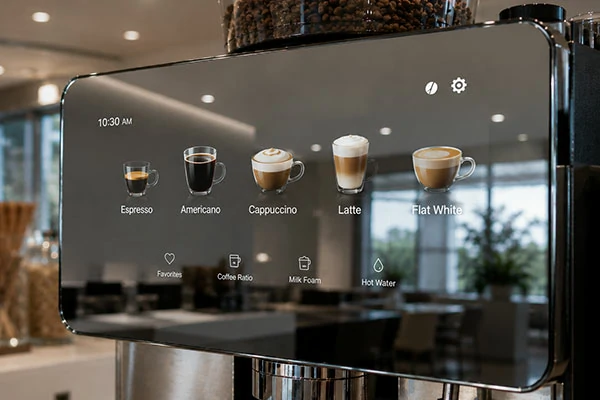
Appliance displays can use a reflective front surface so the interface remains visually discreet when inactive and becomes visible when illuminated.
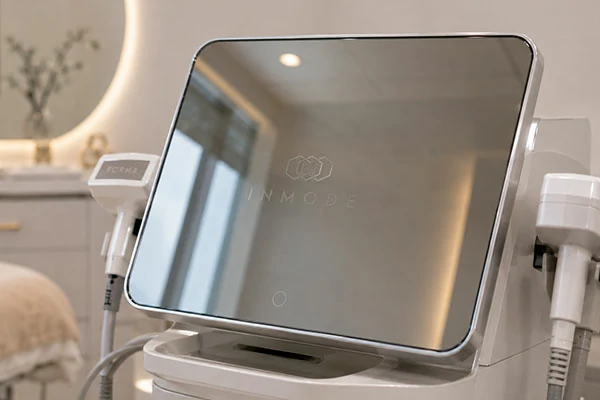
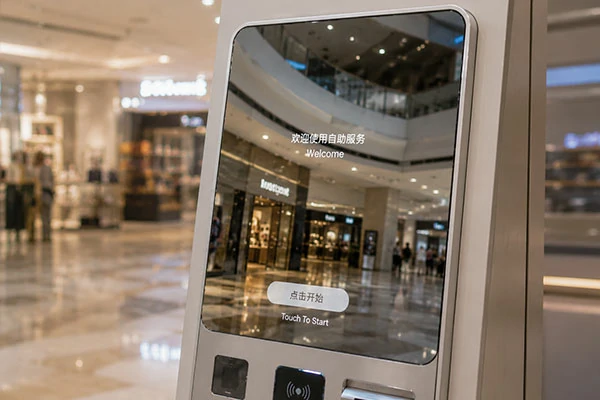
Selected HMI designs can use mirror-effect cover glass to create a clean inactive appearance while preserving active indicators or display areas.
Reflective coatings can also be evaluated for selected optical glass components where the coating side, geometry and reflection requirement are defined by the drawing.
Send the glass material, size, thickness, quantity, drawing and application. For display projects, include the required mirror appearance, display type or brightness, visible area, coating side, printing, strengthening, AF and bonding requirements.
GelivableGlass reviews mirror coating together with the mechanical, optical and assembly requirements of the complete glass component.
Mirror appearance and display visibility can be reviewed together so the coating target matches the intended product behavior.
Machining, printing, strengthening, mirror coating, compatible AF treatment and adhesive bonding can be planned in one production route.
For smart mirrors and hidden displays, sample validation with the real display is recommended before the optical specification is frozen.
Glass mirror coating is a reflective surface process used to create a mirror-like appearance on custom glass. The coating can be designed for primarily reflective use or for controlled transmission in smart-mirror and hidden-display applications.
Not necessarily. A conventional mirror is mainly designed for reflection. Display mirror glass may require a controlled balance between reflection and transmission so illuminated content can remain visible through the coated glass.
The most useful information includes the desired mirror appearance, display brightness, target reflection or transmission if known, coating side, visible display area, glass material, thickness and any printing or AF requirements.
Yes. Printed borders, icons, logos and masking areas can be coordinated with the mirror coating. The coating area and printing sequence should be defined before production.
Yes, AF treatment can be evaluated for frequently touched mirror surfaces when the mirror coating, AF layer and any printing are compatible as one surface stack.
Custom holes, slots, cutouts and profiles are normally planned before final coating. The exact sequence depends on the glass material, strengthening requirement and coating system.
Typical checks include surface appearance, coating uniformity, scratches, color variation and any specified optical values. Smart-mirror projects should also be evaluated with the actual display module.
Read technical articles about mirror-coated glass, smart mirror displays, reflective coatings, optical performance and custom glass fabrication.
View All BlogSend us your drawing and application requirements. GelivableGlass can review the reflective coating together with glass machining, printing, strengthening, AF treatment and final bonding.
Contact our team to review mirror appearance, display visibility, coating area and finished-component requirements.