
Why We Upgraded a Customer's Robot Camera Cover Glass to Gorilla Glass—at No Extra Cost

The cost of one small camera cover glass and the reputation of an entire robot are never on the same scale.
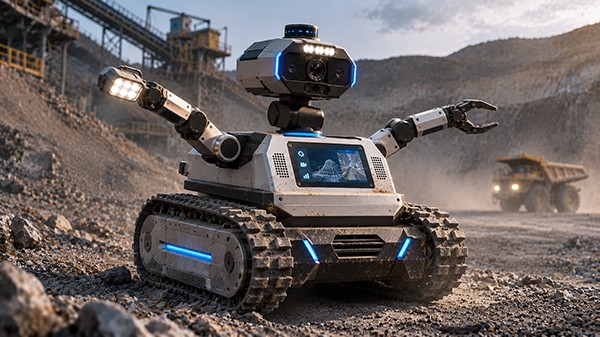
Recently, an overseas customer we have worked with for eight years visited Gelivable for a pre-production factory audit. During our discussions, we learned more about the machine our glass would become part of: a high-end robot designed to operate for extended periods outdoors, amid dust, gravel and sand.
The customer was open about the original material choice. Because the protective glass was positioned on the side of the robot rather than in what they considered a primary area, they had specified soda-lime glass to keep the component cost under control.
From a purchasing standpoint, that choice made sense.
But after understanding the operating conditions, we made a different decision: we would upgrade that camera cover glass to Corning Gorilla Glass and absorb the additional material cost ourselves.
Here is why we felt that was the responsible choice.
We Looked Beyond the Drawing to Where the Glass Would Actually Work
The robot would be operating in an environment full of abrasive particles. Wind can carry fine sand across its housing. Movement over gravel or sandy ground can throw particles against exposed surfaces, including a side-mounted camera's protective optical window.
Quartz, a common component of sand, has a Mohs hardness of approximately 7. Ordinary soda-lime glass is generally softer. Under repeated abrasive contact, this difference creates a meaningful risk of surface scratching. The extent of damage still depends on particle size, pressure, contact frequency and the protective design of the equipment.
For a camera window, scratches are more than a cosmetic concern. Surface damage can scatter light, lower image contrast and affect the quality of visual information reaching the robot's sensing system. That does not mean every scratch will cause a sensing error; it means optical deterioration is a risk worth considering before production.
And replacement may not be simple. Depending on the product design, changing an optical window can involve partial disassembly, repair work, recalibration and equipment downtime. The cost of that work may far exceed the price difference between two pieces of glass.
The customer had understandably been looking at the purchase price. We felt it was important to look one step further, at the cost of the component across the robot's working life.
Why We Chose Corning Gorilla Glass
For this project, we wanted to evaluate a more damage-resistant protective window rather than simply reproduce the original soda-lime specification.
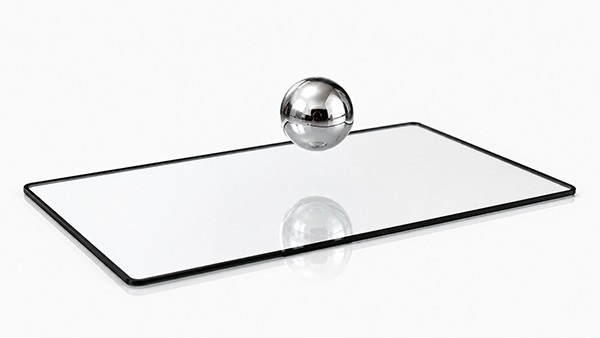
Corning Gorilla Glass is an aluminosilicate cover-glass family engineered for improved damage resistance. Its chemical-strengthening process creates compressive stress near the glass surface, helping resist the growth of defects that can lead to breakage. Corning explains the underlying ion-exchange mechanism in its official Gorilla Glass manufacturing overview.
No glass is immune to abrasive sand, and a material change alone cannot guarantee a scratch-free window throughout a robot's service life. The final result also depends on the selected glass grade, thickness, exposed geometry, coatings, mounting method and real operating conditions.
Nevertheless, choosing a suitable damage-resistant material can be an important step toward reducing avoidable damage in a demanding environment. That was the reasoning behind our proposed upgrade: protect the robot's optical interface more carefully before scratches become a costly service issue.
Why We Offered the Upgrade at No Additional Cost
Someone might reasonably ask: if the customer selected soda-lime glass, why should Gelivable pay to change it?
Because our customer understands robots, and we understand glass.
When our experience tells us that a material choice deserves another look, remaining silent is the easiest option. It is not the option we want to take.
For this particular project, we decided to cover the additional cost of upgrading the camera cover glass. This was not a promotion or a blanket offer of free Gorilla Glass upgrades. It was a decision based on the operating conditions we had discussed and our responsibility to raise concerns that might otherwise be overlooked.
To us, the value of a component should not be measured only by the number on its quotation. It should also be measured by how well it serves the finished product.
We Want to Be More Than a Supplier That Simply Follows Drawings
There is a straightforward way to work in manufacturing. A customer provides a drawing. The supplier makes the part to specification, meets the tolerances and ships the order. If a problem emerges later, everyone can point to the approved drawing.
Meeting specifications is essential. But we believe a good manufacturing partner should also ask questions that sit outside the drawing.
Is this glass going to face sand, dust or repeated contact? Is its exposed edge sufficiently protected? Could a more suitable material help reduce future maintenance? Does the small saving on a component make sense when compared with the value of the complete machine?
These are the questions we want to bring into the conversation, especially for custom cover glass and optical-window projects where material choice can affect the performance of the finished equipment.
Once a piece of glass becomes part of a robot, it is no longer just a piece of glass.
It may be part of the robot's eyes. And when the window in front of those eyes is damaged, the consequences can extend well beyond the cost of the glass itself.
A Small Material Decision Can Reflect a Bigger Commitment
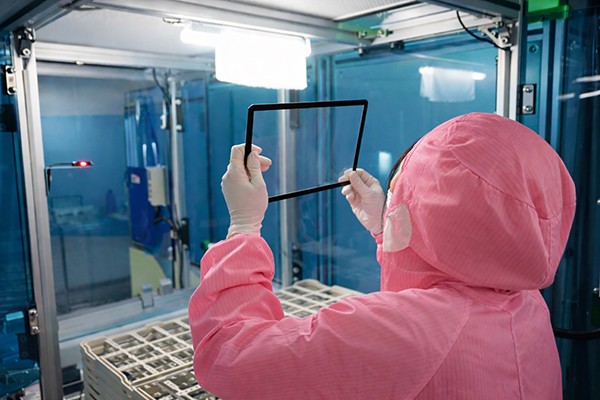
We did not invent a new technology or solve an extraordinary engineering challenge. We simply looked carefully at the job a small optical window needed to do and chose to support a more appropriate material for that application.
Premium product quality is not defined by a specification sheet alone. Sometimes it comes down to whether someone pays attention to a small, easily overlooked part—and is willing to take responsibility for recommending a better option.
Our customer made a reasonable choice about cost. We chose to take responsibility for looking a little further.
If you are developing an industrial robot, camera enclosure or other product requiring custom protective glass, share the application environment, drawings and performance requirements with our team. We can discuss material suitability, optical considerations and fabrication options before production.