
Gorilla Glass for Display Cover Glass: Benefits, Applications & Selection Guide
Gorilla Glass is a strong choice for display cover glass when a product needs a thin, optically clear protective surface with improved resistance to scratches and everyday damage. Its value is most obvious on frequently touched or exposed displays, but material choice alone does not determine performance. Glass grade, thickness, edge design, machining, printing, coatings and the final assembly all need to match the application.
For engineers and buyers, the practical question is therefore not simply “Is Gorilla Glass better?” but “Does this display need the performance benefits of Gorilla Glass, and can the finished cover glass be processed correctly for the product?” This guide explains where Gorilla Glass adds value, when another glass may be sufficient, and what to review before specifying it for a custom display cover.
Why Gorilla Glass Is Used as Display Cover Glass
Corning® Gorilla® Glass is engineered as a protective cover glass rather than an LCD substrate. Corning explains that its damage resistance is created in part through an ion-exchange strengthening process that places the glass surface into compression. This compressive layer helps resist the growth of surface flaws that can lead to cracking or breakage during use.
That combination of damage resistance, scratch resistance, thin form factors and optical quality makes Gorilla Glass useful for display and touch interfaces where the front glass is part of both the protective structure and the user experience.
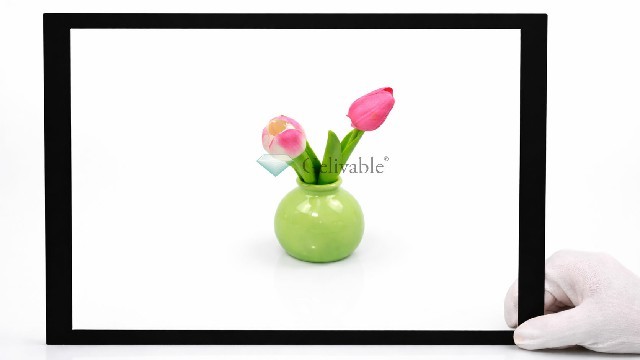
Key Benefits for High-Performance Display Covers
1. Better Resistance to Everyday Damage
A display cover is exposed to finger pressure, handling, cleaning, accidental contact and, in some applications, repeated operation throughout the day. Gorilla Glass is designed to improve resistance to the scratches, bumps and other damage events that commonly affect exposed glass surfaces.
This does not make the glass unbreakable. Any glass can fail under sufficient impact, edge damage, stress concentration or improper assembly. The advantage is a stronger performance margin when the finished product must tolerate demanding day-to-day use.
2. Scratch Resistance Helps Preserve Display Quality
Surface scratches do more than affect appearance. They can reduce visual quality, become more visible under strong lighting and, if severe enough, act as damage sites that weaken glass. A more scratch-resistant cover helps preserve the viewing area on frequently operated displays.
This is especially relevant for touch interfaces, handheld equipment, control panels and screens that are cleaned often or used in environments where dust and hard particles may contact the surface.
3. Thin Glass Supports Compact Product Design
Cover glass must protect the display without adding unnecessary thickness or weight. Gorilla Glass is available in thin specifications, allowing designers to maintain a compact front assembly while still using a strengthened cover material.
The correct thickness should still be selected according to glass size, support structure, impact requirement, opening geometry and assembly method. Choosing the thinnest available glass is not automatically the best engineering decision.
4. Optical Clarity Supports the Display Underneath
A cover glass sits directly in the optical path between the display and the user. High optical quality helps preserve image clarity and color visibility instead of making the protective layer a weak point in the display system.
For projects with stronger requirements for glare, reflection or touch cleanliness, the base material can be combined with suitable surface treatments rather than relying on the glass material alone.
Gorilla Glass vs. Standard Cover Glass: What Actually Changes?
| Design Consideration | Gorilla Glass | Standard Cover Glass |
|---|---|---|
| Damage resistance | Designed for demanding cover-glass use and chemical strengthening | Depends strongly on glass type, thickness and strengthening method |
| Scratch performance | Suitable where retained surface quality is a priority | May be sufficient for protected or lower-wear applications |
| Thin design | Well suited to thin, compact display assemblies | Can also be used, but the required thickness may differ by design |
| Cost | Usually selected when performance justifies the material cost | Often more economical for less demanding applications |
| Best fit | Frequent-touch, exposed, premium or higher-risk display interfaces | Protected, cost-sensitive or moderate-duty display applications |
The comparison should not be treated as a universal ranking. Soda-lime glass, other aluminosilicate glasses and specialty materials can all be appropriate depending on product requirements. The correct decision comes from the complete mechanical, optical, environmental and cost specification.
When Is Gorilla Glass Worth Choosing?
Gorilla Glass is particularly worth evaluating when one or more of the following conditions apply:
The display or touchscreen is operated frequently.
The front glass is exposed to repeated handling or cleaning.
Scratch visibility would reduce product quality or readability.
The design requires a relatively thin and lightweight protective cover.
The equipment needs a more durable front surface than standard glass can economically provide at the required thickness.
The product has a high-value display or touch module that benefits from stronger front protection.
The glass requires precise machining, printing or functional surface treatments as part of a finished custom component.
When Gorilla Glass May Not Be Necessary
Gorilla Glass is not automatically the best choice for every display. If the glass is well protected by the housing, rarely touched, relatively thick, low risk, or highly cost-sensitive, a standard chemically strengthened or thermally tempered glass may be more practical.
Very large dimensions, unusual thickness requirements, special thermal conditions, optical requirements and production volume can also affect the material decision. A useful material review should therefore compare the actual performance target rather than selecting Gorilla Glass only because of brand recognition.
Processing Matters as Much as the Glass Material
A high-performance raw glass sheet can still become a poor finished cover if holes, edges, printing, coatings or assembly details are not handled correctly. For custom display projects, the fabrication route should be reviewed together with the material specification from the beginning.
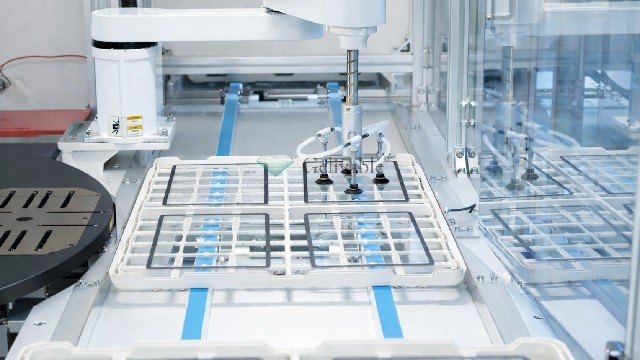
Precision Cutting and CNC Machining
Custom dimensions, holes, slots, cutouts and non-standard shapes must match the display module, housing and assembly structure. Edge quality and machining geometry are especially important because edge defects and stress concentrations can reduce the strength of a glass part.
Printing and Black-Mask Design
Silk-screen or other printing processes can create borders, icons, logos and light-blocking areas around the active display window. Printing position, color, opacity and dimensional tolerance should be coordinated with the visible display area and bonding structure.
AG, AR and AF Surface Treatments
Functional treatments solve different problems. AG anti-glare treatment can reduce distracting glare, AR anti-reflective coating can reduce surface reflection and improve transmission, and AF anti-fingerprint coating can make frequently touched surfaces easier to clean. The appropriate treatment depends on lighting conditions, display brightness, touch frequency and appearance requirements.
GelivableGlass supports custom Gorilla Glass processing including cutting, CNC machining, hole drilling, edge finishing, printing, strengthening, coatings and adhesive bonding. See our custom Corning Gorilla Glass capabilities and Gorilla Glass processing solutions for more details.
Typical Display Cover Glass Applications
Common B2B applications include:
Industrial HMI and machine-control screens: frequently operated interfaces that need durable front protection.
Medical equipment displays: clear, cleanable display covers for diagnostic and monitoring equipment.
Touch display modules: protective front glass for integrated touch and LCD assemblies.
Smart-home control panels: thin, visually clean glass for wall-mounted or frequently touched interfaces.
Inspection instruments and test equipment: protective viewing windows and control displays used in professional environments.
Commercial terminals and POS displays: high-use interfaces that benefit from improved scratch and handling resistance.
For display-specific fabrication options, you can also review our custom LCD cover glass solutions.
How to Specify Gorilla Glass for a Custom Display Project
A useful quotation or engineering review should include more than the words “Gorilla Glass.” The following information helps determine whether the material and processing route are suitable:
Required Gorilla Glass grade, if already specified
Overall length, width and thickness
Hole, slot, cutout and edge requirements
Drawing tolerances and critical assembly dimensions
Printed border, logo, icon or display-window requirements
AG, AR, AF or other surface-treatment requirements
Adhesive or bonding requirements
Application environment and expected handling conditions
Prototype and production quantities
If the grade has not yet been selected, GelivableGlass can review the project requirements and discuss suitable material and processing options before sampling.
Frequently Asked Questions
Is Gorilla Glass the same as ordinary tempered glass?
No. Gorilla Glass is a Corning cover-glass family engineered for damage resistance and chemical strengthening. Ordinary tempered glass may refer to different glass compositions and strengthening methods, including thermal tempering. The materials and performance targets are not automatically equivalent.
Why is Gorilla Glass suitable for touchscreens?
Touchscreens benefit from a smooth, optically clear and durable front surface. Gorilla Glass combines thin form factors with damage and scratch resistance, which makes it useful for frequently touched displays when the overall mechanical and optical design supports it.
Can Gorilla Glass be cut, drilled and printed?
Yes, Gorilla Glass can be processed into custom shapes with precision cutting, CNC machining, holes, edge finishing and printing. The exact process sequence depends on the glass grade, geometry, thickness, strengthening requirements and finished-part specification.
Can Gorilla Glass have anti-glare or anti-fingerprint treatment?
Yes. Depending on the project, Gorilla Glass can be combined with functional treatments such as AG anti-glare, AR anti-reflective and AF anti-fingerprint surfaces. The correct treatment should be selected according to the display environment and required optical or touch performance.
Is Gorilla Glass always the best display cover material?
No. It is most valuable when its damage resistance, scratch performance, thin design capability and optical quality solve a real project requirement. Standard glass or another specialty glass may be more economical or technically appropriate for other applications.
What should I provide for a custom Gorilla Glass quote?
Send the drawing if available, dimensions, thickness, quantity, application, holes or cutouts, printing requirements, surface treatments and any bonding or assembly requirements. This allows the material and fabrication route to be reviewed together.
Need Custom Gorilla Glass for a Display?
Send GelivableGlass your drawing, target dimensions, thickness, quantity and application requirements. Our team can review the Gorilla Glass material, machining, printing, surface treatment and assembly requirements for prototype or production projects.
Corning® and Gorilla® are registered trademarks of Corning Incorporated. GelivableGlass provides custom processing and fabrication services for applicable Corning Gorilla Glass materials.