
What Display Applications Are Suitable for AG Anti-Glare Glass?
AG anti-glare glass is most suitable for display applications where strong ambient light, reflections, long viewing periods, or frequent touch operation can interfere with screen readability. Typical applications include outdoor displays, industrial HMI panels, medical equipment, testing instruments, commercial terminals, and self-service devices.
In custom display cover glass projects, customers often begin by focusing on strength, thickness, tolerances, holes, screen printing, and assembly structure. Once the product enters its real operating environment, however, another issue can become immediately obvious: screen reflection.
Outdoor light, overhead lamps, glass curtain walls, and reflections from nearby metal equipment can all create strong mirror-like reflections on ordinary glossy glass. The display itself may be bright enough, but users may still see lights, the sky, surrounding equipment, or even their own reflection instead of the screen content.
This is where AG anti-glare glass becomes valuable. AG treatment modifies the glass surface so reflected light is diffused rather than forming a sharp specular reflection. Corning similarly explains that anti-glare surface treatments work by scattering incoming light and diffusing distracting surface reflections (Corning: What’s a Surface Treatment?).
For display cover glass, touchscreen cover glass, industrial control screens, and HMI panels, AG treatment is therefore not simply about whether the screen can display content. The practical question is whether the screen remains easy to see and comfortable to operate under the lighting conditions in which the equipment will actually be used.
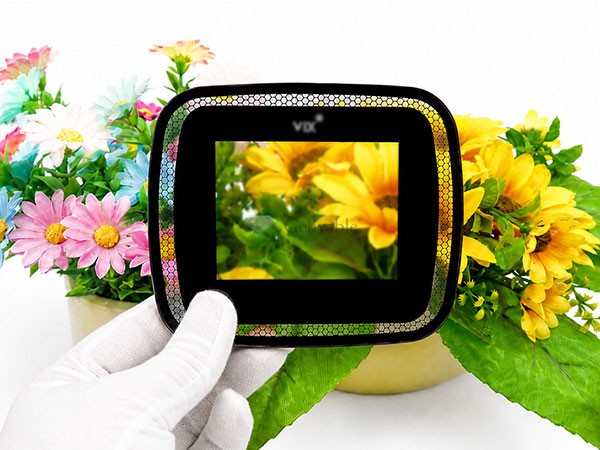
Where Is AG Anti-Glare Glass Most Useful?
| Application | Main Glare Problem | Why AG Glass Helps |
|---|---|---|
| Outdoor display equipment | Sunlight, sky and building reflections | Diffuses strong surface reflections and improves practical visibility |
| Industrial HMI panels | Overhead lamps and reflections from machinery | Helps operators read data and controls from changing viewing positions |
| Medical and test equipment | Room lighting and nearby light sources | Reduces distracting reflections during extended observation |
| Commercial and self-service terminals | Mixed natural and artificial lighting | Improves viewing comfort and usability in public environments |
1. Outdoor Display Equipment
Outdoor environments are among the most common situations in which glare becomes a serious usability problem.
Direct sunlight, sky reflection, and reflections from surrounding buildings can create strong mirror-like reflections on ordinary cover glass. Even when the display has high brightness, screen content may still be partially obscured at certain viewing angles.
AG anti-glare glass is therefore commonly considered for outdoor control screens, public information displays, outdoor terminals, testing-equipment display windows, and similar equipment. By diffusing surface reflections, AG treatment can make displayed information easier to recognize in bright or changing light.
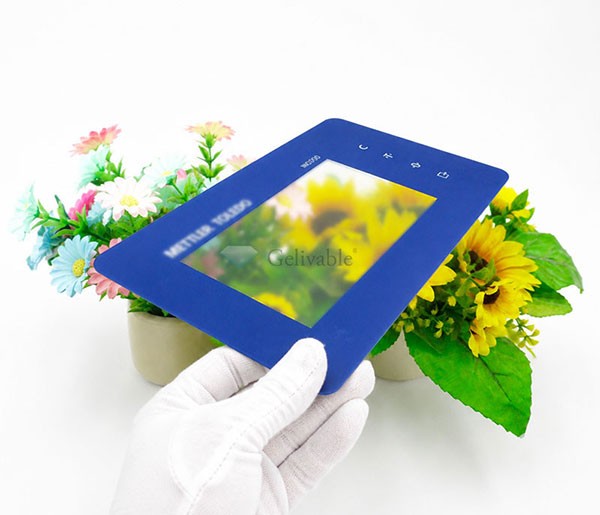
Outdoor readability is not determined by AG treatment alone. Display brightness, optical bonding, glass thickness, sealing, environmental durability, and whether AR anti-reflective glass is also required should be evaluated as part of the complete display structure.
AG and AR solve different optical problems. AG primarily diffuses reflected light through a matte surface texture, while AR coating is designed to reduce the amount of light reflected from the surface. In demanding outdoor projects, the two approaches may need to be evaluated together.
2. Industrial Control Screens and HMI Panels
Lighting conditions in industrial environments are often complex. Overhead lighting, reflections from metal equipment, changing operator positions, and long periods of continuous viewing can all affect the practical readability of an industrial display.
For industrial control screens, HMI interfaces, automation equipment panels, and instrument display windows, clear access to data, alarm messages, controls, and equipment status can directly affect operating efficiency.
AG anti-glare glass helps reduce distracting surface reflections and can make these interfaces easier to read from different positions. This is one reason AG treatment is frequently considered when specifying custom LCD and display cover glass for industrial equipment.
For devices that require frequent touch operation or extended viewing, a carefully selected AG surface is often more practical than highly reflective glossy glass. The important point is to choose an AG level that reduces glare without unnecessarily sacrificing image detail.
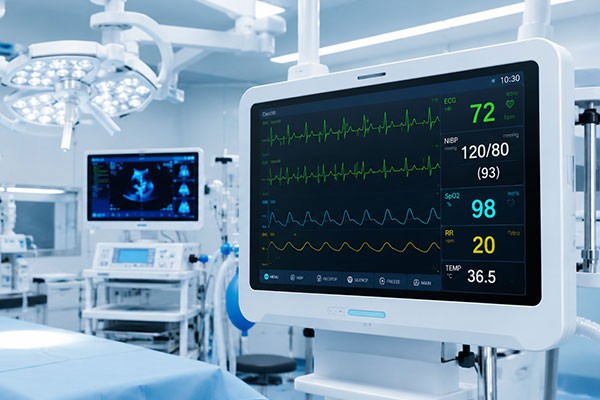
3. Medical Equipment and Testing Instruments
Medical equipment, laboratory devices, and testing instruments often place high demands on display readability. These screens may present measurements, images, test results, menus, or equipment status that users need to view accurately for extended periods.
Examination-room lighting, laboratory lighting, and surrounding light sources can create visible reflections on ordinary cover glass. AG treatment can reduce these reflections and help create a more comfortable viewing surface.
The correct AG specification should still be selected carefully. A high-haze surface may reduce reflections more aggressively, but it can also soften fine display details. For high-resolution interfaces or image-intensive equipment, haze, gloss, roughness, transmittance, viewing distance, and display resolution should be evaluated together.
4. Commercial Displays and Self-Service Terminals
Commercial displays, self-service inquiry machines, payment terminals, queue-management systems, and information kiosks are often installed in environments with changing and unpredictable lighting.
Shopping-mall lighting, daylight, advertising light boxes, glass curtain walls, and nearby reflective surfaces can all interfere with screen visibility. A matte AG surface can reduce harsh reflections and help users read and operate the interface more quickly.
These applications also frequently involve repeated touch. Where fingerprints and cleaning are concerns, AG glass can be evaluated together with AF anti-fingerprint treatment to improve cleanability and touch-surface performance.
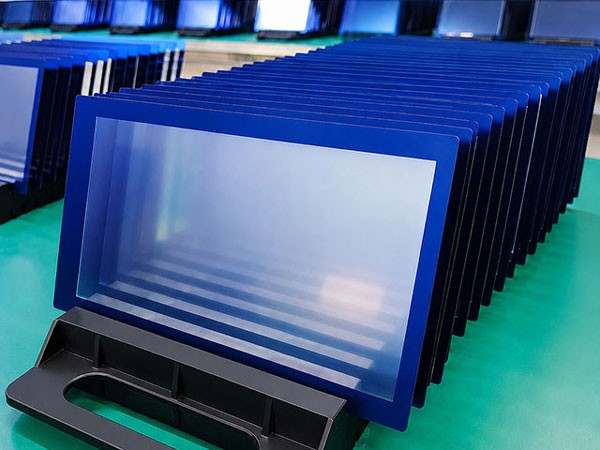
AG Glass Selection Should Not Focus Only on “Anti-Glare”
In real projects, a customer may simply ask, “Can you make AG glass?” Usually, the answer is yes. The more important questions are: what level of AG treatment is required, what display will be used, and under what lighting conditions will the equipment operate?
The selection of AG anti-glare glass should consider haze, gloss, light transmittance, surface roughness, display resolution, viewing distance, touch feel, cleaning method, glass thickness, dimensional tolerances, edge processing, CNC holes, screen printing, and the final bonding structure.
Corning's technical work on display washout also shows why AG selection cannot be reduced to a single parameter: different AG textures can influence display readability differently under ambient light, and AR treatment can further affect the optical result (Corning technical paper on display washout performance).
If the AG surface has too much haze, fine display details may appear softer or grainier. If the treatment is too weak, the reduction in visible reflection may not be sufficient. The correct choice is therefore a balance between glare reduction and display clarity rather than simply maximizing haze.
For customers who need to define the AG process itself in more detail, Gelivable's anti-glare glass processing guide explains the role of gloss, haze, roughness, transmittance, and process integration in custom AG cover glass.
How Gelivable Supports Custom AG Anti-Glare Glass
Gelivable provides custom AG anti-glare glass processing according to customer drawings, samples, display requirements, and operating conditions.
In a real project, the goal is not only to determine whether AG treatment can be applied. The glass specification also needs to be reviewed together with the display structure, screen brightness, lighting environment, touch frequency, appearance requirements, manufacturing tolerances, and cost target.
Gelivable can combine AG treatment with precision cutting, CNC machining, holes and cutouts, edge grinding, chamfering, shaped-glass processing, screen printing, chemical strengthening, AR coating, AF treatment, and other processes according to the project requirements. These capabilities allow the cover glass to be developed as a finished component rather than as an isolated sheet of treated glass.
Customers can also review Gelivable's broader custom glass fabrication capabilities when a project requires multiple machining, printing, coating, or assembly processes.
What Information Should You Provide for an AG Glass Project?
If the correct AG parameters are not yet clear, start with the application rather than trying to specify haze or gloss immediately. Useful information includes the display size and type, cover-glass dimensions and thickness, operating environment, expected lighting conditions, viewing distance, touch frequency, drawing requirements, printing areas, bonding structure, and any AR or AF requirements.
With this information, the AG surface can be evaluated around the actual product instead of selecting a generic anti-glare specification.
Conclusion
AG anti-glare glass is particularly suitable for display applications with complex lighting, obvious reflections, long viewing periods, or frequent operation. Typical examples include outdoor display equipment, industrial control screens, HMI panels, medical equipment, testing instruments, commercial terminals, and self-service devices.
However, AG glass is not necessary for every display, and higher haze does not automatically mean better performance. The right solution should balance reflection control, display clarity, touch experience, manufacturing structure, and cost.
For a display cover glass project, the core value of AG treatment is simple: make the screen easier to see and more comfortable to use in the real environment where the equipment operates.
If you are developing an AG cover glass project, you can contact GelivableGlass with your drawing, glass size, display type, operating environment, and surface-treatment requirements for technical review and quotation support.