
When your product/device moves from a cold outdoor environment into a warm room, it may instantly fog up and become blurry; when medical experts face fogged-up endoscope lenses during surgery… These annoyances and risks caused by fog now have a perfect solution—anti-fog glass coating.

What is Anti-Fog Coating?
Anti-fog coating is a special functional layer applied to the surface of glass. It is not an ordinary coating but a advanced technology based on nanotechnology and hydrophilic chemistry. This invisible “armor” fundamentally alters the behavior of moisture on the glass surface, allowing the glass to remain clear and transparent for extended periods, even under extreme temperature differences and humidity conditions.
How Does Its Magic Principle Work?
To understand the principle, we must first understand how fog forms:
The Nature of Fogging: When water vapor in the environment encounters a cold glass surface below the dew point temperature, it condenses into countless tiny spherical water droplets. These droplets scatter light irregularly, acting like countless tiny lenses, causing the glass to appear white and hazy, drastically reducing light transmission.
Anti-fog coating tackles this fundamental issue through two core approaches:
Hydrophilic Anti-Fog (Mainstream Technology):
Principle: The coating layer is highly hydrophilic. It significantly reduces the surface tension of water, preventing condensed moisture from forming separate tiny water droplets.
Result: The moisture quickly spreads out evenly, forming an ultra-thin, uniform water film. This water film does not scatter light; light can pass through almost without loss, ensuring visual clarity. You will see the fog disappear rapidly, and the glass surface becomes exceptionally clear, as if covered with a layer of “water film.”
Hydrophobic Anti-Fog:
Principle: The coating layer is highly hydrophobic (similar to the lotus leaf effect). It causes a very large contact angle between water droplets and the glass, making it difficult for droplets to adhere to the surface.
Result: Condensed water droplets quickly roll off, carrying moisture away and preventing the formation of covering fog. This method is also effective in specific scenarios, such as on the exterior glass of cars.
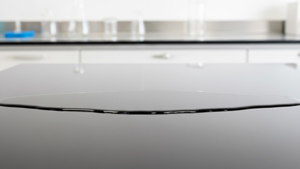
Which Side is it Coated On? The Front or the Back of the Glass?
This is a crucial question, and the answer depends on the source of the fog.
In the vast majority of cases, the anti-fog coating should be applied to the side of the glass that comes into contact with moisture.
For example:
Bathroom Mirrors, Diving Masks: Fog comes from the hot, moist air generated by your shower or breath, so it is coated on the front side (the side facing you).
Car Windows: Moisture from the breath of occupants inside the car causes fogging on the interior side in cold weather, so the interior side requires anti-fog treatment.
Inside Optical Instruments (e.g., endoscopes): To prevent moisture condensation generated in the internal confined space, the coating is applied to the interior surface of the lens assembly.
Remember a simple principle: wherever the warm air is, that’s where the fog forms, and that’s where the coating should be applied.
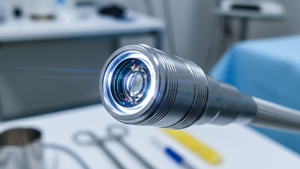
What Equipment is it Mainly Used For? What Problems Does it Solve?
The application of anti-fog coating is extremely widespread, quietly enhancing safety and user experience across various industries.
Medical and Scientific Research Fields:
Endoscopes, Laparoscope Lenses: Ensure an absolutely clear field of view during surgery, which is key to the success of minimally invasive surgeries.
Microscopes, Incubator Observation Windows: Guarantee uninterrupted precise observation and data recording for researchers.
Industrial and Commercial Fields:
Refrigerated Display Cases: Make food and beverages in supermarkets and convenience stores clearly visible, enhancing product appeal and reducing energy consumption caused by frequent defogging.
Industrial Inspection Equipment Windows: Ensure continuous and accurate production quality inspection in hot and humid environments.
Personal and Sports Protection:
Swimming Goggles, Ski Goggles: Allow sports enthusiasts to enjoy their activities without fog interference.
Protective Face Shields: Provide medical staff and laboratory personnel with a consistently clear field of view.
Household Field:
Bathroom Mirrors: Say goodbye to the embarrassment of not being able to see the mirror clearly after showering; always be able to groom yourself.
Transportation Field:
Car Windows: Significantly shorten defogging time for windshields and side windows during winter and rainy driving, enhancing driving safety.
Aircraft Windows, High-Speed Train Windows: Reduce fog caused by internal-external temperature differences, ensuring passengers always have a beautiful view outside.
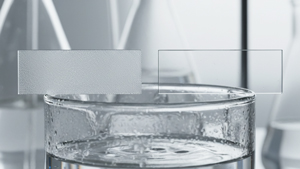
By Choosing Gelivable’s Anti-Fog Coating, You Will Gain:
Ultimate Clarity: Eliminate 99% of fog interference, restoring the true view.
Long-Lasting Durability: The nano-level coating is sturdy, wear-resistant, and maintains stable performance over time.
Safety and Environmental Friendliness: Non-toxic and harmless, suitable for various sensitive environments.
Wide Applicability: Customized solutions can be provided based on different substrates and application scenarios.
Fog is no longer the end of a clear view. Choose Gelivable’s anti-fog coating technology to make clarity the norm and elevate safety and efficiency to new heights.
Contact us immediately to equip your products with “never-lost” bright eyes!